
Argentine peso
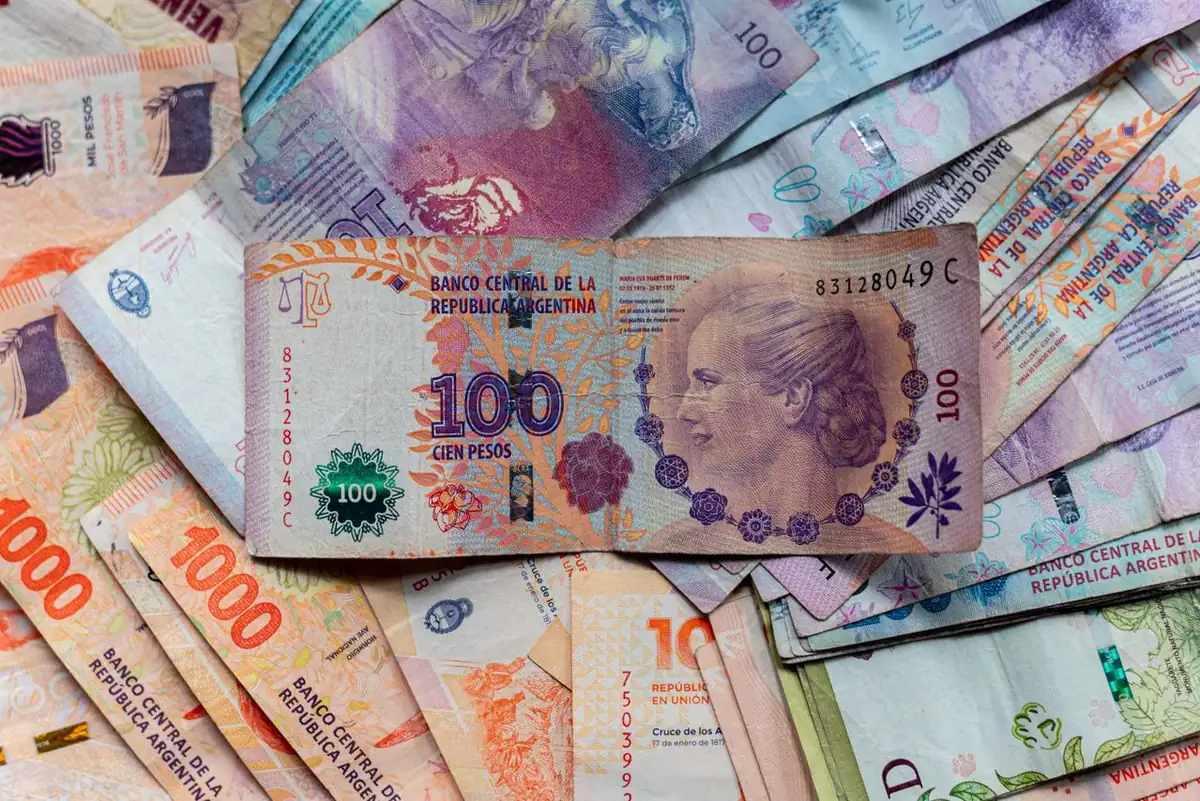
The Argentine peso is Argentina's monetary unit. Its international code is ARS. The Banco Central de la República Argentina issues and manages the legal-tender banknotes and coins.
The current currency series took effect on January 1, 1992. One peso replaced 10,000 australes, the unit used immediately before it.
Last reviewed:
Basic facts
- Name:Argentine peso.
- Code:ARS.
- Common symbol:
$. - Monetary authority:Banco Central de la República Argentina.
- Subdivision:100 centavos per peso.
- Current series introduced:January 1, 1992.
The $ symbol does not uniquely identify the Argentine peso. Other currencies also use it. International contexts should use ARS or “Argentine peso” to prevent confusion.
The current peso series
Argentina has used several units named peso, as well as the austral. The current unit is not the peso moneda nacional, the peso ley, or the Argentine peso introduced in 1983.
The central bank documents five main currency series since 1881:
- Peso moneda nacional.
- Peso ley 18.188.
- Peso argentino.
- Austral.
- The peso in use since 1992.
Replacing one unit with another changes the nominal scale used for prices. It does not restore lost purchasing power or change the economy's real supply of goods and services by itself.
The 1992 series began under the convertibility regime, which initially set a legal rate of one peso per U.S. dollar. The 2002 Public Emergency and Exchange Regime Reform Law ended that legal parity. The currency kept the peso name and ARS code.
Who issues the peso
The Banco Central de la República Argentina issues and manages legal-tender cash. It also organizes parts of the payment system and publishes monetary and exchange-rate information.
Different banknote and coin families do not always represent different currency units. Several design series can coexist within the same peso series while they remain legal tender.
The available denominations can change. The central bank's current catalog provides the latest official reference.
How its exchange rate is stated
An ARS per USD quote shows how many Argentine pesos equal one U.S. dollar under the selected source and rate.
If ARS per dollar rises, more pesos are needed to obtain one dollar. In that specific relationship, the peso has depreciated against the dollar.
Argentina can have several exchange-rate references for different purposes. A reader should identify:
- The series name.
- The publishing institution.
- The data date.
- The exact unit.
- Whether the reference is official, bank-based, financial, or from another market.
Argentine exchange-rate references are not interchangeable. Each comparison identifies the source and purpose of the selected series.
How Cartonindex uses ARS
Cartonindex takes a public series stated in pesos per dollar and combines it with the U.S. dollar price of a fictional reference.
Conceptual example:
fictional reference price in ARS = fictional reference price in USD × ARS per USD
It then divides the fictional package units by the converted cost to calculate the equivalence shown on the page.
The current value, full formula, and date appear on each comparison page:
How to interpret the comparison
A decline in Robux, V-Bucks, or Monopoly money per peso means that one ARS buys less of the selected reference under this method.
The movement can result from:
- An exchange-rate change.
- A change in the fictional product's price.
- A change in the selected package.
- A methodology update.
The result does not represent average wages, the full cost of living, or the purchasing power of every Argentine household.
Continue reading
- Inflation, devaluation, and depreciation.
- Why does a currency change in value?.
- What is purchasing power?.
- Glossary: redenomination.