
Colombian peso
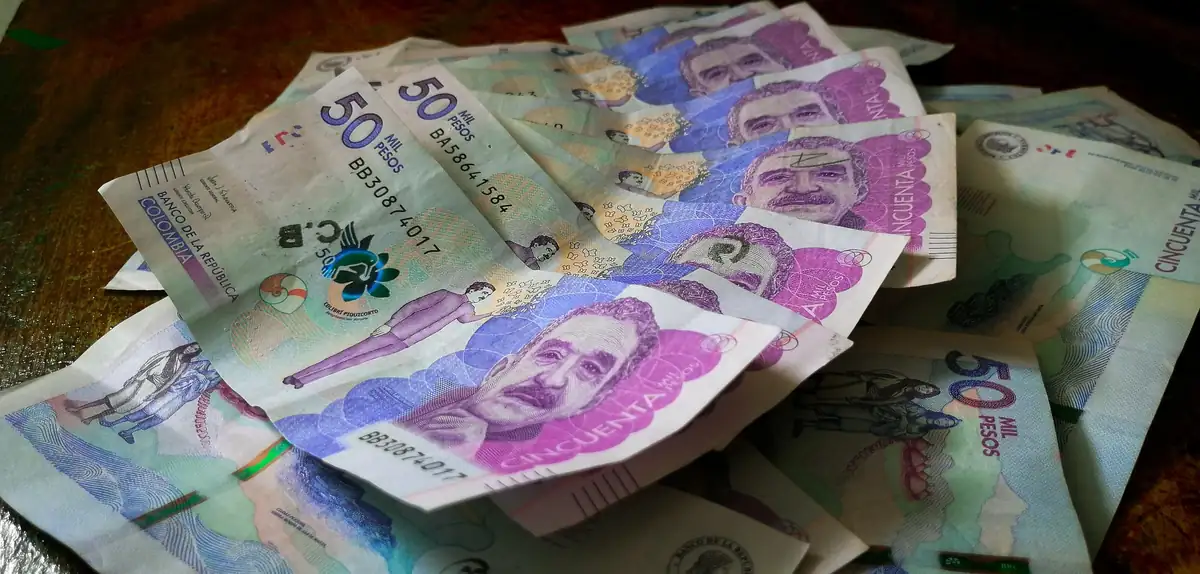
The Colombian peso is Colombia's monetary unit and unit of account. Its international code is COP. The Banco de la República has the exclusive authority to issue the country's banknotes and coins.
Colombia uses a flexible exchange-rate regime. Supply and demand in the foreign-exchange market mainly determine the peso's value against the U.S. dollar. The monetary authority can intervene under its own rules and objectives.
Last reviewed:
Basic facts
- Name:Colombian peso.
- Code:COP.
- Common symbol:
$. - Monetary authority:Banco de la República.
- Legal subdivision:100 centavos per peso.
- General exchange-rate regime:flexible.
As with other pesos, the $ symbol needs context. International text should use COP or “Colombian peso.”
Issuing legal currency
The Colombian Constitution and Law 31 of 1992 give the Banco de la República the exclusive function of issuing legal currency.
The bank produces, issues, supplies, exchanges, and destroys the banknotes and coins used in Colombia. The amount of cash is not set by printing an arbitrary number. The institution estimates demand, replaces damaged cash, and manages distribution.
Colombian banknotes show people, landscapes, and elements of biodiversity. Current coins also use species and natural designs. These elements shape the visual identity but do not change a piece's face value.
What is the TRM?
The Tasa Representativa del Mercado, usually called the TRM, is a widely used reference for the U.S. dollar price in Colombian pesos.
The Banco de la República describes the TRM using U.S. dollar purchase and sale transactions by specified foreign-exchange intermediaries. Its methodology defines which transactions are included, how they are weighted, and when the rate is published.
The TRM is a reference. A card, bank, exchange bureau, or platform can apply another price because of fees, margins, taxes, and execution time.
Flexible exchange-rate regime
Colombia has used exchange-rate flexibility since 1999. The authority does not promise to keep the dollar at a permanently fixed peso value.
The exchange rate can move because of:
- Foreign trade.
- Prices of exported and imported products.
- Interest rates.
- Foreign investment.
- Risk perceptions.
- Economic expectations.
- International movements of the U.S. dollar.
A peso depreciation against the dollar does not have one automatic cause. A daily movement does not prove a specific explanation by itself.
How Cartonindex uses COP
The index uses a public series stated in Colombian pesos per dollar. It applies that rate to the price of the selected fictional reference.
Available comparisons:
The comparison states whether it uses the Tasa Representativa del Mercado, another official series, or a different provider. The phrase “official exchange rate” does not identify the data by itself.
How to interpret the Colombian peso's scale
Colombian prices are often stated in thousands or millions of pesos. This scale does not mean that Colombia makes absurdly large payments or that the peso is unusable.
The nominal unit is smaller than a dollar or euro. Domestic wages and prices use the same scale. Purchasing-power comparisons require price and income data, not only U.S. dollar conversion.
This profile shows the difference between a large nominal amount and a real loss of value.
Continue reading
- What is an exchange rate?.
- What is purchasing power?.
- Strong or weak currency.
- Glossary: exchange rate.