
Japanese yen
The yen is Japan's monetary unit. Its international code is JPY. Its common symbols are ¥ and the Japanese character 円.
The modern monetary system based on the yen was established in 1871. The reform replaced a complex set of earlier coins and units with a national decimal system.
Last reviewed:
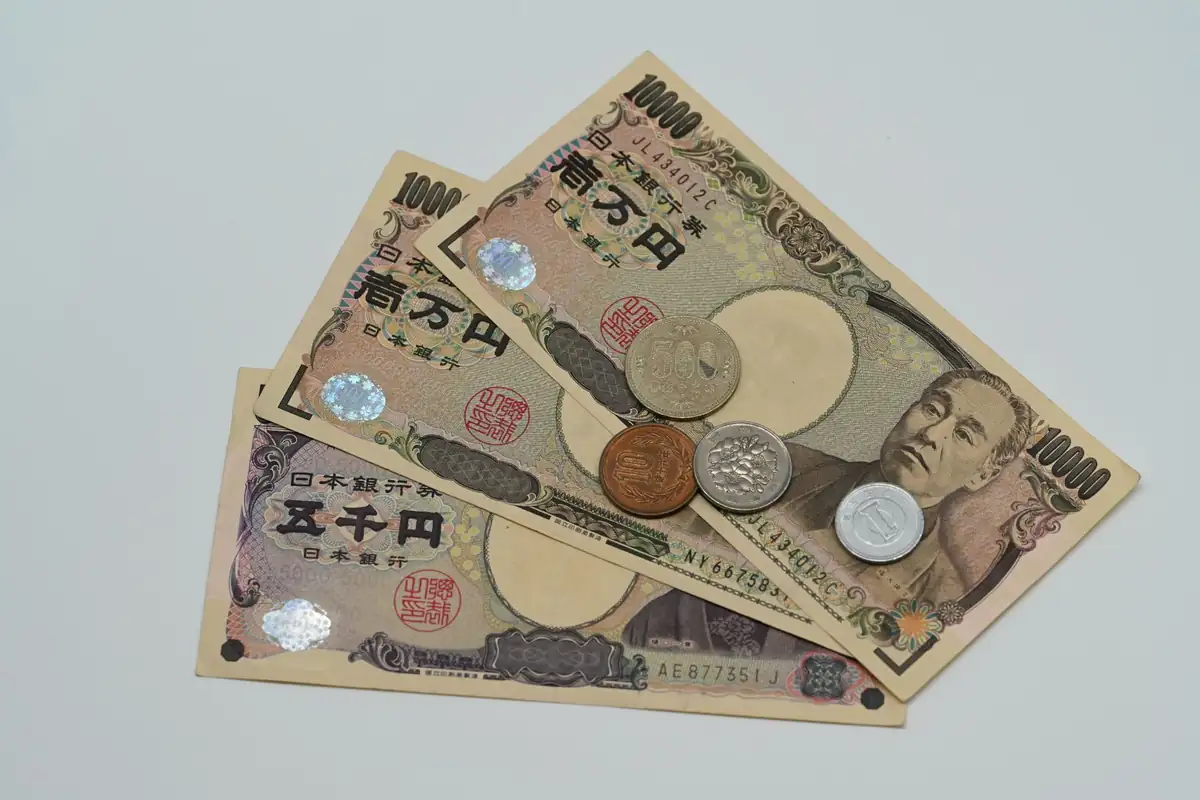
Basic facts
- Name:Japanese yen.
- Code:JPY.
- Common symbols:
¥and円. - Banknote issuer:Bank of Japan.
- Modern base unit:yen.
- Introduced as the national unit:1871.
Historical law also defined the sen and rin as fractions of the yen. These subdivisions are no longer used in everyday payments. Modern prices are normally stated in whole yen.
The birth of the modern yen
Before the 1871 reform, Japan used gold, silver, and copper coins, notes issued by domains, and other instruments with changing relationships.
The New Currency Act introduced the yen, sen, and rin within a decimal system. The reform formed part of the institutional modernization of the Meiji era. It created one common unit for prices, contracts, and payments.
The Bank of Japan was founded in 1882. It began issuing its first banknotes in 1885 and later became the country's sole banknote issuer.
Banknotes and coins
The Bank of Japan issues banknotes, while the Japanese government is responsible for coins. Official pages show current issues and older series that remain valid.
A new series of 10,000, 5,000, and 1,000 yen banknotes entered circulation in 2024. It includes new security and universal-design features. The 2,000 yen note remains valid, although it is less common in daily circulation.
Denominations can change over time. The official list provides the current reference.
Why one dollar equals many yen
The number of units per dollar does not show, by itself, that the yen has a problem. A currency unit can be small because of its historical design and still function normally.
For example, a currency that does not use decimals in practice will often show larger everyday prices than a currency divided into hundredths.
To evaluate yen movements, compare its change over time. Do not rely only on the nominal number against the euro or U.S. dollar.
How to read a yen quote
A JPY per USD series shows how many yen equal one U.S. dollar.
- If the number rises, more yen are needed per dollar, and the yen has depreciated against the dollar.
- If the number falls, fewer yen are needed, and the yen has appreciated against the dollar.
The inverse relationship, USD per JPY, can also be used. Always identify the base currency before reading a chart.
How Cartonindex uses JPY
Cartonindex combines a public yen-per-dollar series with the U.S. dollar price of each fictional reference.
Available comparisons:
A low unit value does not, by itself, describe the currency's usefulness or its domestic purchasing power. The yen provides a useful contrast with currencies that reached large numbers after inflation or redenominations.
Comparison limits
One yen can equal less than one fictional unit without revealing anything conclusive about a Japanese worker's purchasing power.
Prices and wages in Japan are also stated in yen. Comparing living standards requires income, domestic prices, and purchasing power parity data. A market exchange rate alone is not enough.
Continue reading
- What does a strong or weak currency mean?.
- Nominal value, real value, and price.
- What is an exchange rate?.
- Glossary: base currency.