What is money?
Money is a tool that people use to make payments, state prices, and carry purchasing power from one time to another.
Money can be physical or electronic. Dollar bills and coins are money. Funds available in many bank accounts also function as money.
The material itself does not need to be valuable. A $20 bill is not worth $20 because of its paper. It works because the monetary system recognizes and supports its use as $20.
Last reviewed:
The three basic functions of money
Economists usually describe money through three functions.
Medium of exchange
Money lets buyers and sellers trade without barter.
A worker can earn dollars from an employer and spend those dollars later at a grocery store. The grocery store does not need anything directly from the employer.
Money connects the transactions.
Unit of account
Money gives prices a common scale.
A $5 item and a $50 item use the same unit. That makes their prices easy to compare.
The same unit can also be used for wages, debts, budgets, taxes, and contracts.
Store of value
Money can preserve purchasing power for later use.
This function is not perfect. Inflation can reduce what a fixed number of dollars buys. Exchange rates can also change the dollar's value against other currencies.
Money performs this function better when its purchasing power is reasonably stable.
Money is more than cash
Cash is the most visible form of money. Most everyday payments do not require physical currency.
Bank deposits can be transferred by card, check, bank transfer, or payment app.
A debit card is not a separate form of money. It is a payment instrument that gives instructions about funds in an account.
A payment app may also move existing dollars instead of creating a new currency.
The distinction matters because payment technology can change while the underlying unit of money remains the same.
Central bank money and commercial bank money
Modern monetary systems contain different forms of money.
The central bank supplies physical currency and reserve balances used by financial institutions.
Commercial banks can create deposit money when they make loans.
Assume a bank approves a $10,000 loan and credits the borrower's checking account. The borrower now has a $10,000 deposit available to spend.
The loan also creates a $10,000 obligation. New money does not mean new net wealth for the borrower.
As the loan principal is repaid, the related deposit money is removed from the banking system.
This is why modern money creation is not limited to a printing press.
Fiat money and the U.S. dollar
The U.S. dollar is fiat money.
A dollar is not a promise that the holder can redeem it for a fixed amount of gold. Its value does not come from the physical material in a banknote.
Dollars work because they are widely accepted, prices are stated in dollars, and the financial system can transfer dollar payments.
Law and public institutions also support the system. Taxes and many other obligations are stated and settled in dollars.
Confidence matters, but confidence is not an unexplained belief. It reflects the reliability of institutions, payment systems, markets, and expectations about future purchasing power.
What gives money value?
Money has value because people can use it.
Wide acceptance gives a currency immediate usefulness. Price stability helps it preserve purchasing power. A deep payment and banking system makes it easy to transfer.
A currency also has an external value. Foreign-exchange markets determine how much of another currency it can buy.
These ideas describe different parts of value. A dollar can remain worth one dollar as a unit of account while its purchasing power changes over time.
Money is not the same as wealth
Money can be used to acquire goods, services, and assets. It is not the same thing as the productive resources behind an economy.
Real wealth includes homes, factories, businesses, infrastructure, skills, technology, and natural resources.
Creating more currency units does not automatically create more of those resources.
If nominal spending rises much faster than available output, prices can rise instead of real wealth.
This distinction explains why a larger bank balance is meaningful only in relation to what that balance can buy.
Is gold money?
Gold has served as money in many periods of history. Today, it is more often treated as an asset or store of value.
Most U.S. stores do not state prices in ounces of gold. Employers do not usually pay wages in gold. Federal taxes are not normally calculated in gold.
An asset can be valuable without serving as the economy's general-purpose money.
Are cryptocurrencies or game currencies money?
Some digital assets perform one or two functions of money in limited settings.
A cryptocurrency can be accepted for certain payments. It may still have limited use as a common unit of account or a stable store of value.
A game currency operates inside an even narrower system. Players can use it to state prices and buy items inside a game. The issuer usually controls how users acquire and spend it.
Cartonindex can compare the acquisition price of these units with real currencies. The comparison does not make the game unit legal tender or a general-purpose currency.
A large number of units does not mean low value
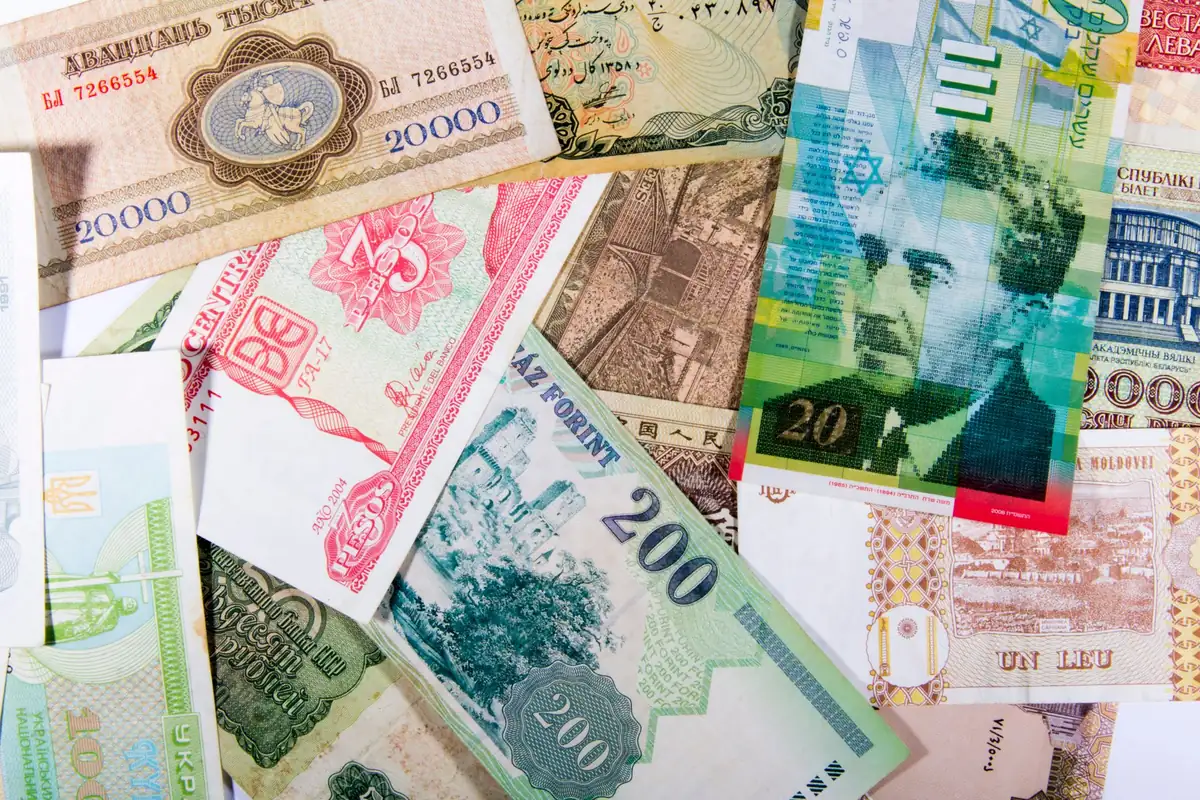
Currency denominations are arbitrary.
One currency can use thousands of units for an ordinary purchase. Another can use only a few units.
The number of units does not tell you how rich a country is or how strong a currency is.
Purchasing power, prices, income, inflation, and exchange rates provide more useful information.
What money means for Cartonindex
Cartonindex uses documented prices and exchange rates to create a common comparison.
A real currency can have a market exchange rate. A fictional unit can have a documented purchase price from its issuer.
The calculation connects those references.
The result does not mean that the units share the same legal, economic, or financial properties. It also does not create a direct exchange market between them.
Key points
- Money works as a medium of exchange, unit of account, and store of value.
- Modern money includes physical currency and bank deposits.
- Commercial banks can create deposits when they make loans.
- Fiat money does not require redemption into gold.
- Money is not the same as real wealth.
- Digital or fictional units can resemble money without serving as general-purpose money.